Insights
Diagnosing Corporate Distress : Financial and Legal Red Flags Before Turnaround Part 2
07 September 2026 3 minutes read

Why Diagnosis Must Precede Intervention
A turnaround should never begin with action alone. It must begin with diagnosis. Without a clear diagnosis, management may spend scarce cash, time, and creditor goodwill treating symptoms instead of addressing root causes. This is especially relevant in Indonesia, where financial transparency may be limited, group structures can be complex, and early warning signs are often softened or delayed until the business has already entered a critical stage.
Core principle: accurate diagnosis is not an administrative exercise; it determines the quality, timing, and credibility of every turnaround decision that follows.
1. Distress Develops Gradually
Corporate distress is not a binary condition. It usually moves through four stages: underperformance, financial stress, financial distress, and insolvency. The earlier the warning signs are identified, the broader the available options remain.
- Underperformance: margins, revenue quality, or operating indicators begin to weaken, but cash flow is still manageable.
- Financial stress: liquidity pressure appears through delayed payments, maturity extensions, or emergency credit lines.
- Financial distress: the company’s ability to meet obligations is materially impaired and default risk increases.
- Insolvency: liabilities exceed assets or the company cannot meet maturing obligations, forcing formal restructuring, PKPU, asset sales, or bankruptcy options.
Practical implication: delay narrows the room for maneuver. A company that could still be stabilized through operational intervention may later require creditor-led restructuring or court-supervised proceedings.
2. Key Financial Red Flags
The first layer of diagnosis is financial. Numbers rarely tell the full story, but they often reveal where the pressure begins.
- Liquidity pressure: sustained negative operating cash flow, delayed supplier payments, or a lengthening cash conversion cycle.
- Weak earnings quality: operating cash flow consistently below reported net income.
- Deteriorating ratios: interest coverage below comfortable levels, high leverage, falling current ratio, or growing dependence on short-term debt.
- Covenant pressure: repeated waivers, tighter amendment terms, or technical events of default.
- Audit signals: delayed financial statements, going concern emphasis, recurring qualifications, or unexplained auditor changes.
3. Operational, Legal, and Governance Red Flags
Financial symptoms are usually accompanied by operational and governance signals. These indicators are important because they often appear before formal default occurs.
- Supply chain pressure: suppliers shorten payment terms, request cash on delivery, interrupt supply, or escalate disputes.
- Leadership signals: sudden CFO or finance director departure, defensive communication, or avoidance of questions about cash flow and refinancing.
- Asset and revenue quality: deferred maintenance, aggressive discounting, weaker customer selection, or channel stuffing to accelerate revenue recognition.
- Litigation exposure: simultaneous claims from suppliers, employees, contractors, or creditors, especially when patterns suggest potential PKPU filings.
- Governance weakness: undocumented related-party transactions, unclear intercompany fund flows, ineffective audit committees, or weak independent oversight.
- Regulatory pressure: late reports, tax investigations, sectoral sanctions, licensing disputes, or product and project-related regulatory issues.
4. Diagnostic Methodology
a. Financial Health Scorecard. Assess liquidity, solvency, profitability, asset quality, and earnings quality on a trend basis. The objective is to identify whether the business is temporarily pressured or structurally impaired.
b. Targeted Legal Due Diligence. Focus on hidden liabilities, cross-default clauses, material adverse change provisions, active claims, and potential director liability. In distress, legal review must be faster and more focused than standard transaction due diligence.
c. Management and Stakeholder Interviews. Interview finance teams, line managers, lenders, suppliers, and key customers. In Indonesia, a non-confrontational approach and confidentiality assurance are often necessary to obtain candid information.
5. From Diagnosis to Intervention 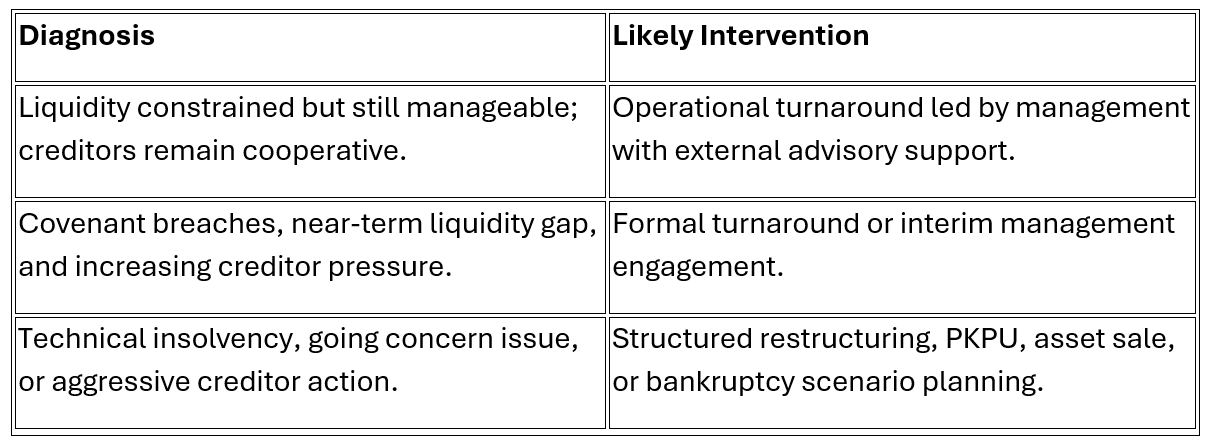
Conclusion
Diagnosis is the foundation of turnaround quality. It helps management distinguish temporary pressure from structural distress, identify legal and governance risks before they escalate, and select the right intervention path. When done early, diagnosis can reopen restructuring options, strengthen negotiations with creditors, and give interim leaders the confidence to act quickly without moving blindly.
Contributor: Putut Sulistiyo | Junior Partner