Insights
Use of SLIK OJK Data as Evidence in PKPU Proceedings
08 June 2026 8 minutes read
1. Introduction
Law Number 37 of 2004 concerning Bankruptcy and Suspension of Debt Payment Obligations (Undang-Undang Kepailitan dan Penundaan Kewajiban Pembayaran Utang “Bankruptcy and PKPU Law”) directly provides 2 (two) mechanisms for the resolution of debt disputes, namely through bankruptcy proceedings and/or Suspension of Debt Payment Obligations (Penundaan Kewajiban Pembayaran Utang “PKPU”). PKPU constitutes an instrument under which a debtor is given the opportunity to resolve its debt issues with creditors through a restructuring mechanism/scheme proposed by the Debtor through a composition plan. If such debt restructuring proposal is approved by the creditors, the composition plan shall subsequently be ratified by a decision of the Commercial Court (Pengadilan Niaga). PKPU is intended to achieve a settlement between the debtor and its creditors so that the debtor may continue its business operations.
Pursuant to Article 222 of the Bankruptcy and PKPU Law, an application for PKPU may be submitted either by the debtor itself or by its creditor(s). Based on Article 222 paragraph (1) of the Bankruptcy and PKPU Law, a debtor may submit a PKPU application if the debtor has more than one creditor. In addition, the Bankruptcy and PKPU Law allows creditors to submit a PKPU application. This is expressly stipulated in Article 222 paragraph (3) of the Bankruptcy and PKPU Law, which essentially provides that a creditor who estimates that the debtor will not be able to continue paying its debts that are due and payable.
The Bankruptcy and PKPU Law stipulates that a PKPU application may be granted by the Commercial Court provided that the application fulfills:
a. Formal requirements as referred to in Article 224 paragraph (1) of the Bankruptcy and PKPU Law
b. Substantive requirements as referred to in Article 222 paragraph (1) and paragraph (3) of the Bankruptcy and PKPU Law
Pursuant to Article 224 paragraph (1) of the Bankruptcy and PKPU Law, the formal requirement for filing a PKPU application is that such application must be submitted to the District Court (Pengadilan Negeri) having jurisdiction over the domicile of the debtor and must be signed by the applicant and its advocate.
The substantive requirements for the approval of a PKPU application are stipulated in Article 222 paragraph (1) and Article 222 paragraph (3) of the Bankruptcy and PKPU Law, namely: the debtor has more than 1 (one) creditor, and the application is submitted by a creditor who estimates that the debtor will not be able to continue paying its debts that are due and payable.
Furthermore, the Bankruptcy and PKPU Law does not specifically regulate the obligation of the PKPU applicant to prove whether the debtor has more than one creditor and who the other creditors are. However, Article 299 of the Bankruptcy and PKPU Law governs procedural and evidentiary law, which in essence provides that insofar as the Bankruptcy and PKPU Law does not stipulate otherwise, the applicable procedural law shall be the Civil Procedure Law (Hukum Acara Perdata).
Based on the applicable civil procedural law, Article 163 HIR, Article 283 RBG, and Article 1865 BW, the burden of proof lies with the party making the assertion, therefore, the applicant submitting the PKPU application must be able to prove that the debtor has debts owed to more than one creditor.
In practice, creditors submitting PKPU applications use various forms of evidence to prove the existence of more than one creditor holding debts that are due and payable by the debtor. One of these is the use of Debtor Information obtained from the Financial Information Service System of the Financial Services Authority (Otoritas Jasa Keuangan “OJK”) (Sistem Layanan Informasi Keuangan “SLIK OJK”). Creditors that are entities authorized to access Debtor Information from SLIK OJK (Reporting Parties), including but not limited to Commercial Banks, may submit such Debtor Information as evidence of the existence of other creditors of the relevant debtor. However, controversy remains regarding the use of Debtor Information from SLIK OJK as valid evidence to prove the existence of other creditors.
2. Mechanism for Filing a PKPU Application
Based on Article 222 of the Bankruptcy and PKPU Law, a PKPU application may be filed by either the debtor or a creditor. Article 222 paragraph (1) provides:
“The Suspension of Debt Payment Obligations shall be submitted by a Debtor having more than 1 (one) Creditor or by a Creditor.”
Based on this provision, PKPU may be filed by a debtor with more than one creditor or by its creditor(s).
The provisions regarding the submission of a PKPU application by a debtor are regulated under Article 222 paragraph (2) as follows:
“A Debtor who is unable or estimates that it will be unable to continue paying its debts that are due and payable may petition for a suspension of debt payment obligations, with the intention of submitting a composition plan which includes an offer of payment of part or all of the debts to the Creditor(s).”
Thus, a debtor may file a PKPU application if the debtor has more than one creditor and is in a condition of being unable or expecting to be unable to continue paying its debts that are due and payable.
Creditors also have the authority to submit a PKPU application pursuant to Article 222 paragraph (3), which provides:
“A Creditor who estimates that the Debtor cannot continue paying its debts that are due and payable may petition that the Debtor be granted a suspension of debt payment obligations, to enable the Debtor to submit a composition plan which includes an offer to pay part or all of its debts to its Creditor(s).”
Based on the above provision, a creditor may file a PKPU application if it estimates that the debtor is unable to continue paying its due and payable debts.
However, no provision in the Bankruptcy and PKPU Law specifically regulates the mechanism for a PKPU applicant to prove that the debtor has more than one creditor.
Referring to Article 299 of the Bankruptcy and PKPU Law concerning procedural and evidentiary law:
“Unless otherwise provided in this Law, the applicable procedural law shall be the Civil Procedure Law.”
Therefore, in conjunction with applicable civil procedural law, Article 163 HIR, Article 283 RBG, and Article 1865 of BW, the burden of proof rests with the asserting party. Accordingly, the applicant submitting the PKPU application must prove that the debtor has debts owed to more than one creditor.
Such requirements must be proven in a summary manner as regulated under Article 8 paragraph (4) of the Bankruptcy and PKPU Law, which also applies to PKPU applications:
“A bankruptcy petition must be granted if there are facts or circumstances that are simply proven that the requirements to be declared bankrupt as referred to in Article 2 paragraph (1) have been fulfilled.”
The elucidation of Article 8 paragraph (4) explains that the phrase “facts or circumstances that are simply proven” refers to the existence of two or more creditors and debts that are due and unpaid. Therefore, both bankruptcy and PKPU petitions must be granted if such facts are simply proven in accordance with Article 2 paragraph (1).
3. Use of Debtor Information from SLIK OJK as Evidence in PKPU Proceedings
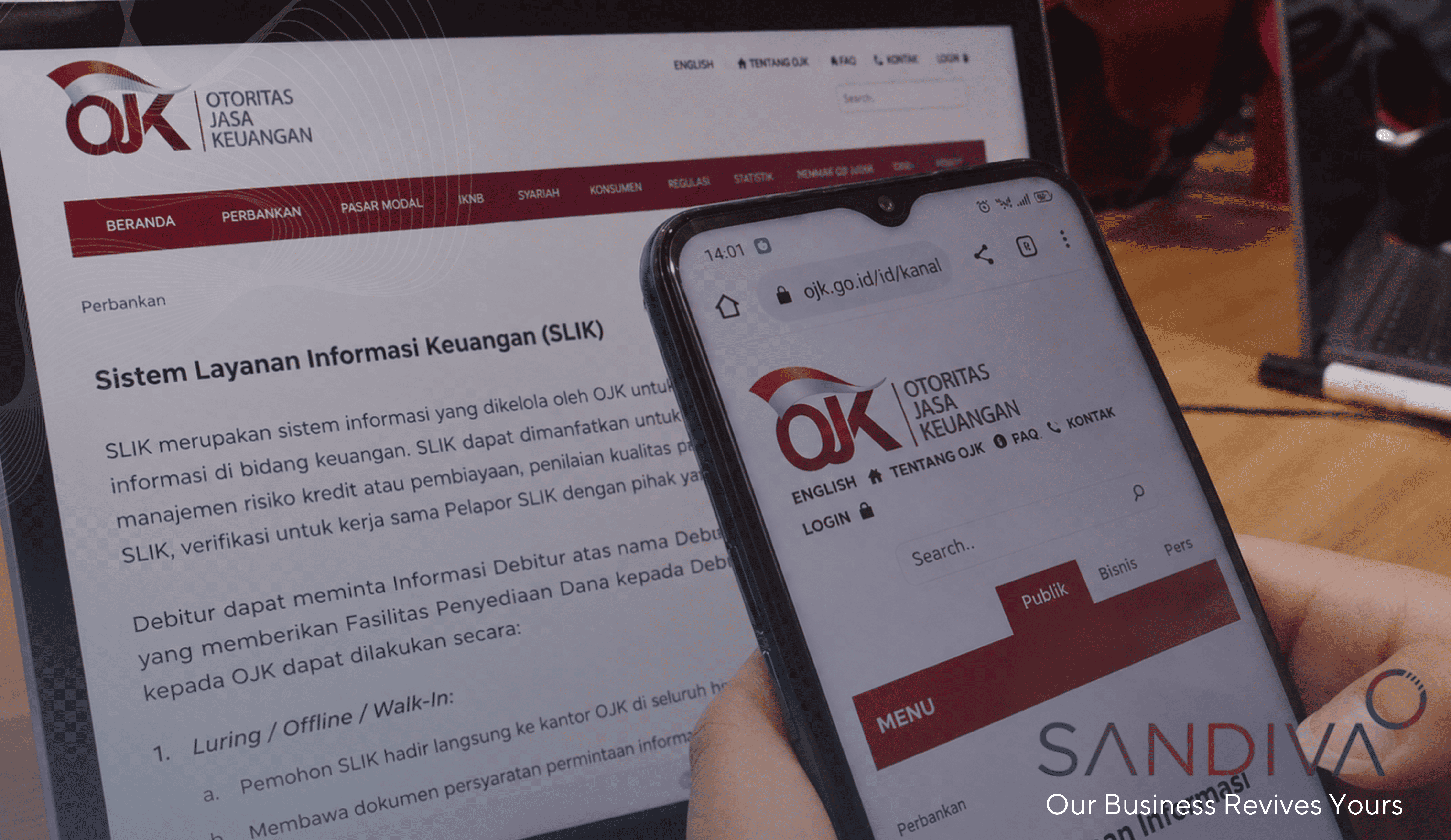
Based on Article 1 paragraph (13) of OJK Regulation Number 18/POJK.03/2017 concerning Reporting and Requests for Debtor Information through the Financial Information Service System (“POJK 18/POJK.03/2017”), SLIK is defined as an information system managed by OJK to support supervisory duties and information services in the financial sector.
Pursuant to Article 2 paragraph (1) of POJK 18/POJK.03/2017, parties that may act as Reporting Parties (pelapor) include:
- Commercial Banks
- Bank Perkreditan Rakyat (BPR)
- Bank Pembiayaan Rakyat Syariah (BPRS)
- Financing Institutions
- Other Financial Services Institutions providing fund facilities, except microfinance institutions
Banks have the authority to request Debtor Information from SLIK OJK. The scope of debtor information that may be requested, as regulated under Article 14 paragraph (2), includes:
- Debtor identity
- Owners and management for corporate debtors
- Fund provision facilities received by the debtor
- Collateral
- Guarantors
- Quality of fund provision facilities
- Other information
In practice, Debtor Information from SLIK OJK has been used as evidence in PKPU examination proceedings. However, the use of such information as valid evidence to prove the existence of other creditors remains controversial.
From the perspective of the Bankruptcy and PKPU Law, a creditor filing a PKPU application must prove that there are other creditors having claims against the same debtor. However, there is no requirement that such other creditors must be present or participate in the proceedings.
Where the creditor filing the PKPU application is an entity authorized to access SLIK OJK data (Reporting Party), this has been affirmed in jurisprudence. In Decision of the Commercial Court at the Central Jakarta District Court (Pengadilan Niaga pada Pengadilan Negeri Jakarta Pusat) Number 92/Pdt.Sus-PKPU/2023/PN Niaga.Jkt.Pst., a PKPU application filed by a Commercial Bank using SLIK OJK debtor information as evidence of other creditors was granted. The Panel of Judges considered as follows:
“Considering that in proving the existence of Other Creditors, the PKPU Applicant has submitted data from the Financial Information Service System (Sistem Layanan Informasi Keuangan "SLIK"), as documentary evidence P-36 and documentary evidence P-37,
Considering that pursuant to Supreme Court Decree (Keputusan Ketua Mahkamah Agung "KMA") No. 109/KMA/SK/IV/2020 concerning the Implementation of the Guidelines for Settlement of Bankruptcy and PKPU Cases, at point 5.1.2 letter (h) it is stated that: creditor data obtained from the Financial Services Authority (Otoritas Jasa Keuangan "OJK") through the website (Financial Information Service System/SLIK) does not have sufficient evidentiary value to prove the existence of 2 (two) creditors, unless supported by other evidence indicating the existence of a debt,
Considering that, as a matter of law, the submission of Other Creditors (Kreditor Lain “KL”) is a matter of proof and not a matter of mandatory presence, and evidence of the existence of such Other Creditors (KL) is not required to take the form of witness testimony (from such Other Creditors) who must be present directly in court to give testimony, but may take the form of other evidence, such as documents/writings and acknowledgment by the debtor;
Considering that, according to the Panel of Judges, the use of data from the Financial Information Service System (SLIK) in filing an application for Suspension of Debt Payment Obligations (Penundaan Kewajiban Pembayaran Utang "PKPU") must be carried out selectively, prudently, and in a limited manner with respect to the debtor’s debt data contained in the SLIK system, provided that:
1. It is justified and/or not disputed by the debtor
2. The debtor intends for itself to be subject to Suspension of Debt Payment Obligations (PKPU) in respect of its debts
3. The debtor has at least 2 (two) debts with different banks, whereby the recording of such bank debts in the SLIK website data arises without the prior approval of the previous bank creditor."
Based on this decision, SLIK OJK data may be used as evidence to demonstrate the existence of other creditors. However, such data must be supported by additional evidence indicating the existence of debt. Such supporting evidence may take the form of documents or debtor acknowledgment.
The judges further emphasized that the use of SLIK OJK data must be careful, selective, and limited, particularly in relation to debtor debt data, and must satisfy certain conditions, including the absence of objection from the debtor and the existence of at least two debts with different banks.
4. Conclusion
a. Debtor information from SLIK OJK constitutes a valid tool for banking institutions to assess the credibility and financial condition of a debtor.
b. The validity of using SLIK OJK debtor information as evidence is reinforced by Decision No. 92/Pdt.Sus-PKPU/2023/PN Niaga.Jkt.Pst., where the PKPU application was granted, with the judges considering that proof of other creditors is not contingent upon their presence and may be established through other forms of evidence such as written documentation or debtor acknowledgment.